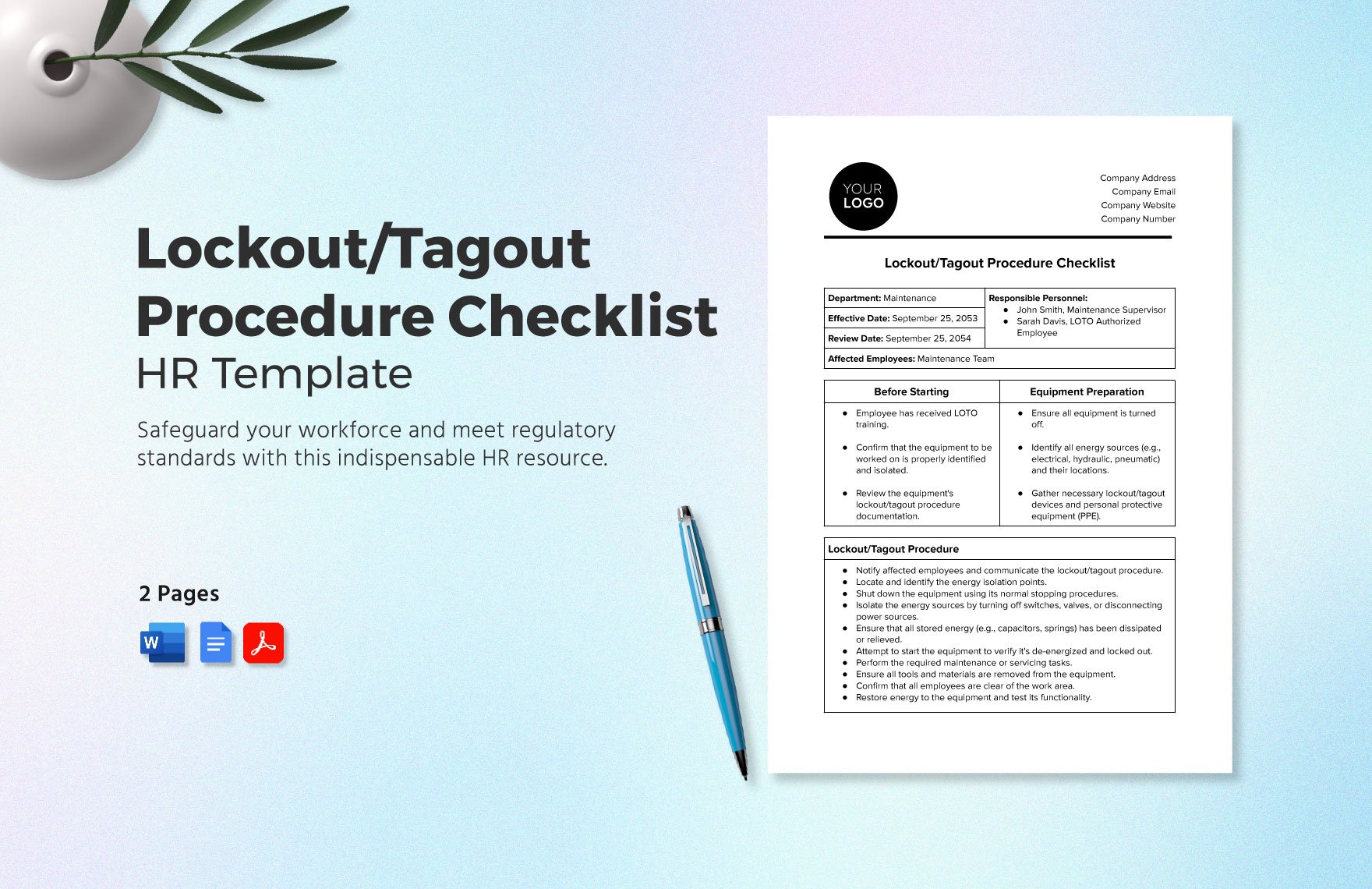
Every year, hundreds of workers suffer serious injuries or fatalities during routine maintenance—all because machinery energized unexpectedly. The solution isn’t complex: it’s documented, repeatable, and rooted in one essential document—the lock out tag out procedure PDF.
This isn’t just paperwork. It’s a legal requirement, a life-saving protocol, and the backbone of any credible safety program. Yet, many facilities still rely on outdated processes, verbal instructions, or incomplete templates downloaded from questionable sources. That’s where a properly structured, organization-specific LOTO procedure PDF becomes non-negotiable.
Here’s how to build, deploy, and enforce a LOTO procedure PDF that actually works—without drowning in compliance jargon.
Why a Lock Out Tag Out Procedure PDF Isn’t Optional
OSHA’s 29 CFR 1910.147 standard doesn’t leave room for interpretation: facilities must have written energy control procedures. That means every machine or process with hazardous energy sources needs a documented lockout/tagout plan.
A PDF version of this procedure ensures: - Consistency: Every technician follows the same steps, every time. - Accessibility: Stored on intranets, tablets, or printed at point-of-use stations. - Compliance: Proves due diligence during audits or incident investigations. - Training Utility: Serves as a reference during onboarding and refreshers.
Without a LOTO PDF, you’re not just risking OSHA violations—you’re gambling with human lives.
Common Gaps in DIY LOTO PDFs
Many teams download generic templates and call it a day. But these often fail in real-world conditions: - Missing machine-specific steps: One procedure doesn’t fit all presses, conveyors, or mixers. - No visual guidance: Text-only steps increase misinterpretation under stress. - Outdated contact info or roles: Lockout coordinators change—PDFs don’t always reflect that. - No integration with PPE or emergency protocols: Workers focus on locking but overlook arc flash risks or isolation verification.
A high-quality LOTO procedure PDF bridges these gaps by being precise, visual, and actionable.
What Belongs in a Real-World LOTO Procedure PDF
Forget vague instructions like “lock the main power.” A functional LOTO PDF must be so clear that a newly trained technician can follow it flawlessly—even under pressure.
Here’s the core framework:
1. Machine or Equipment Identification
- Full name, model, and location
- Energy sources involved (electrical, hydraulic, pneumatic, chemical, thermal)
- Associated hazards (pinch points, stored energy, rotating parts)
Example: “Hydraulic Press Model HP-3000, East Bay Production Line. Primary energy: 480V electrical and 2,500 psi hydraulic system. Secondary hazard: Stored energy in accumulator tanks.”
2. Authorized Personnel List
- Names and roles of trained employees cleared for LOTO
- Supervisor or coordinator contact details
- Date of last training verification
This prevents untrained staff from attempting isolation—a common root cause in near-misses.
3. Step-by-Step Lockout Sequence Break down the process into numbered, sequential actions:
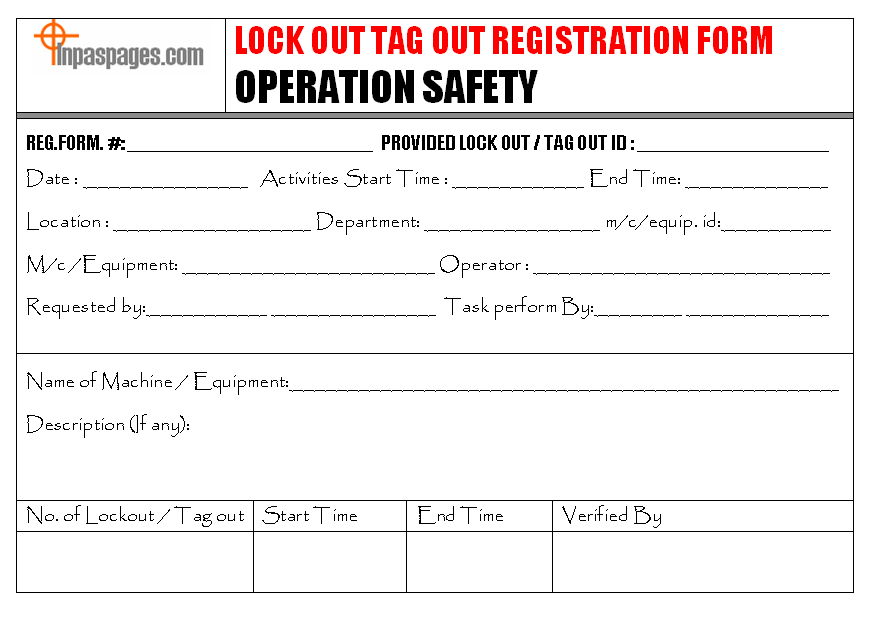
- Notify affected personnel of upcoming maintenance.
- Shut down equipment using normal stopping procedures.
- Isolate all energy sources (disconnect breaker, close valves, block moving parts).
- Apply personal lockout devices (each with employee ID tag).
- Release or dissipate stored energy (bleed lines, ground circuits, block raised components).
- Verify isolation through “try-out” (attempt to restart using normal controls—without removing locks).
Real mistake: Skipping step 6. Workers assume isolation worked—until they reach into a live circuit. The try-out step is the only true confirmation.
4. Tagout Components Each lock must be accompanied by a tag stating:
- Who applied the lock
- Date and time
- Reason for lockout
- Expected duration
Tags act as communication tools—especially during shift changes.
5. Restoration of Energy Equally critical: the process for safely re-energizing.
- Ensure all tools removed and guards reinstalled.
- Confirm all personnel are clear.
- Remove locks only by the individual who applied them.
- Notify team before restart.
- Resume normal operation.
Never allow “group lockout” without a designated coordinator managing the master lockbox.
How to Create a LOTO Procedure PDF That Stands Up to Scrutiny
A useful LOTO PDF isn’t written in a conference room—it’s built from the floor up.
Step 1: Conduct an Equipment Audit List every machine requiring LOTO. For each, identify: - Energy types - Isolation points (disconnects, valves, bleeders) - Stored energy hazards (flywheels, capacitors, springs)
Use photos or diagrams to map these points—this becomes the visual backbone of your PDF.
Step 2: Draft with Maintenance Input Involve senior technicians. They know the quirks: - “The hydraulic line always holds pressure—need to cycle the relief valve twice.” - “Breaker #4 powers both this saw and the conveyor—don’t overlook it.”
Their insights prevent oversights in the final document.
Step 3: Add Visual Aids Embed clear images or diagrams showing:
- Lock placement locations
- Valve closure positions
- Lockbox setup for group lockouts
A labeled schematic cuts confusion by up to 60% compared to text-only guides (based on NIOSH field studies).
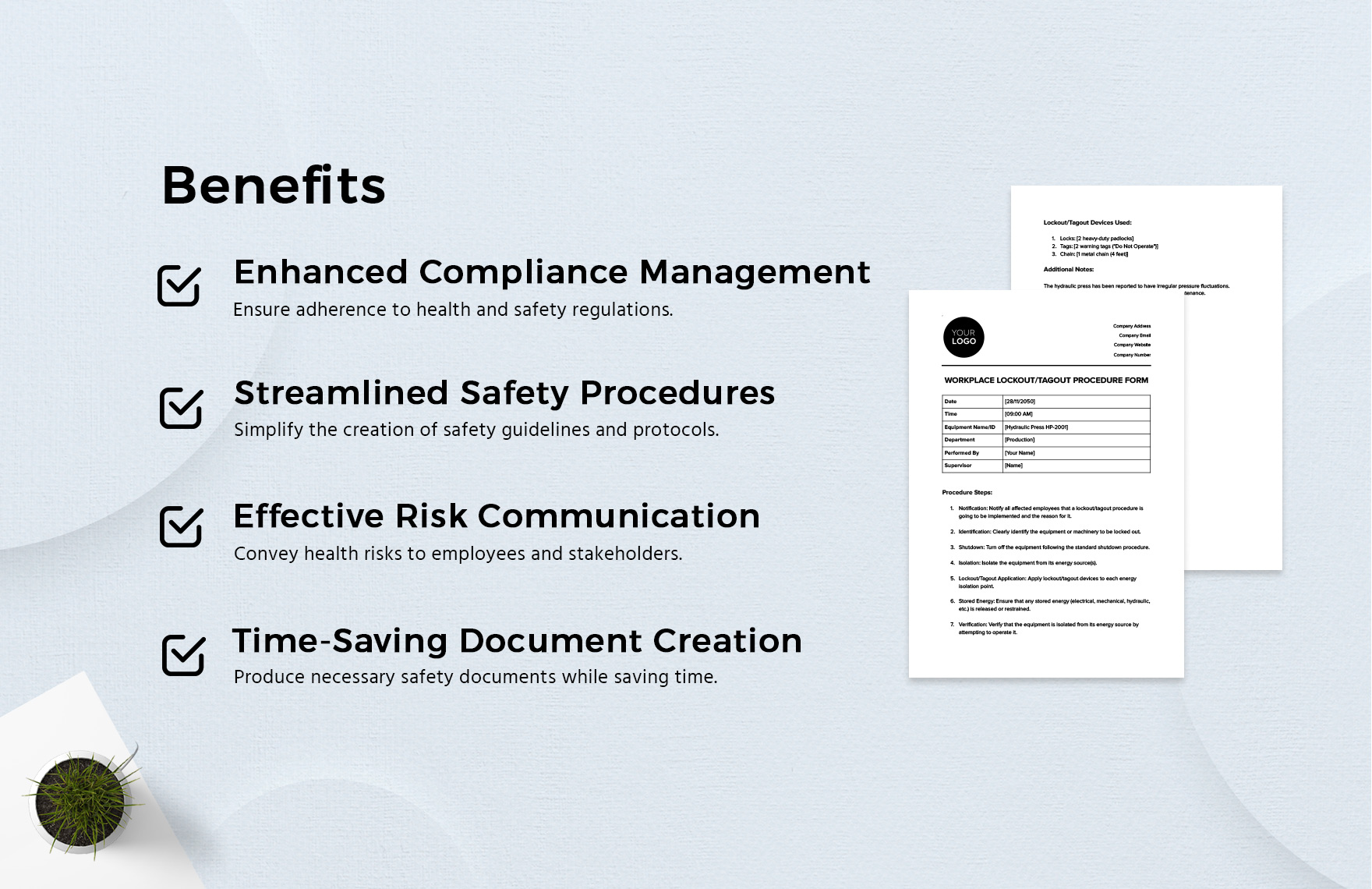
Step 4: Standardize the Format Use a consistent template across all equipment:
- Header: Equipment name, ID number, revision date
- Hazard icons (electrical, mechanical, thermal)
- Step-by-step checklist format
- Footer: “Last reviewed: [Date], Next review due: [Date + 12 months]”
This ensures familiarity—even when switching between machines.
Step 5: Publish and Distribute Save as a PDF
with:
- Searchable text (for quick keyword lookup)
- Mobile-friendly layout
- Password protection if sensitive
Store on shared drives, safety kiosks, and maintenance tablets. Print and laminate copies near high-risk machines.
Top 5 Free & Editable LOTO Procedure PDF Templates
While custom is best, starting with a solid template saves time. Here are five reliable options:
| Name | Source | Best For | Key Features |
|---|---|---|---|
| OSHA LOTO Standard Template | osha.gov | Beginners | Aligns with 1910.147, minimal customization |
| NIOSH Machine-Specific LOTO Guide | cdc.gov/niosh | Detailed workflows | Includes risk assessment matrices |
| Canadian Centre for Occupational Health (CCOHS) | ccohs.ca | Multilingual teams | French/English dual versions |
| Grainger LOTO Procedure Generator | grainger.com | Quick deployment | Fillable PDFs with dropdowns |
| SafetyCulture (iAuditor) LOTO Template | safetyculture.com | Digital workflows | Compatible with mobile audits |
Pro tip: Never use a template without verifying it matches your equipment. Modify every field—especially energy types and isolation steps.
Common LOTO PDF Failures (And How to Avoid Them)
Even well-intentioned programs fall short. Watch for these red flags:
- "One-size-fits-all" documents: A single PDF for all lathes ignores model differences. Result? Incomplete isolation.
- No version control: Old revisions circulate. Always include a revision date and archive obsolete copies.
- PDFs buried in folders: If workers can’t find it in under 30 seconds, it’s useless. Pin it to shop floor monitors.
- No periodic review: Machines change. So should your LOTO. Schedule annual reassessments.
- Missing multilingual support: In diverse teams, a Spanish-speaking tech might skip steps if the PDF is English-only.
A living LOTO procedure PDF evolves with your operation.
Integrating Your LOTO PDF Into Daily Operations Documentation alone doesn’t prevent accidents. Integration does.
Training That Sticks Don’t just hand out the PDF—walk through it. - Use the actual document during hands-on drills. - Simulate lockout scenarios with timed responses. - Test comprehension: “Show me where you’d lock breakers 3A and 3B.”
Train both authorized employees and affected staff—those who don’t perform LOTO but work around locked equipment.
Audits and Compliance Checks Quarterly, audit 10% of LOTO procedures:
- Are locks applied correctly?
- Are tags filled out completely?
- Does the PDF match current machine setup?
Document findings and update the PDF immediately if discrepancies arise.
Digital Enhancements Consider upgrading static PDFs to dynamic tools:
- QR codes on machines linking to live PDFs
- LOTO checklists in EHS software (like EHS Insight or Cority)
- Embedded videos showing proper lock placement
Static PDFs work—but smart integration makes them bulletproof.
Final Step: Make Your LOTO Procedure PDF a Living Document
A lock out tag out procedure PDF shouldn’t gather dust in a binder. It should be: - Visible – posted near equipment or on mobile devices - Actionable – written in clear, step-by-step language - Updated – reviewed annually or after any machine modification - Owned – assigned to a safety manager for oversight
Start today: pick one high-risk machine, build its LOTO PDF from scratch using the steps above, and test it with your team. Then scale across your facility.
Because when seconds count during maintenance, the right PDF isn’t just helpful—it’s what keeps people walking away safely.
FAQ
Where can I download a free lock out tag out procedure PDF? OSHA, NIOSH, and SafetyCulture offer free, customizable LOTO PDF templates. Always adapt them to your specific equipment.
What’s the difference between lockout and tagout? Lockout physically prevents energy release (e.g., padlock on a breaker). Tagout is a warning tag—used only when lockout isn’t feasible.
Do all machines need a LOTO procedure PDF? Yes, if they have hazardous energy sources and require servicing. OSHA requires written procedures for each.
Can a LOTO PDF be digital instead of printed? Yes, if accessible during maintenance. Tablets or intranet portals with PDF access are acceptable.
Who should create the LOTO procedure PDF? A team: safety officer, maintenance lead, and authorized employees familiar with the equipment.
How often should a LOTO PDF be updated? At least annually, or immediately after equipment changes, process updates, or near-miss incidents.
Can multiple people use the same lockout procedure PDF? Yes, but each worker applies their own lock and tag. Use group lockout boxes for coordinated work.
FAQ
What should you look for in Lock Out Tag Out Procedure PDF Guide for Safety Compliance? Focus on relevance, practical value, and how well the solution matches real user intent.
Is Lock Out Tag Out Procedure PDF Guide for Safety Compliance suitable for beginners? That depends on the workflow, but a clear step-by-step approach usually makes it easier to start.
How do you compare options around Lock Out Tag Out Procedure PDF Guide for Safety Compliance? Compare features, trust signals, limitations, pricing, and ease of implementation.
What mistakes should you avoid? Avoid generic choices, weak validation, and decisions based only on marketing claims.
What is the next best step? Shortlist the most relevant options, validate them quickly, and refine from real-world results.